Chemical Action Map
EPA Risk Visualization
01The Challenge
The EPA evaluates chemical risks one substance at a time — a framework designed decades ago that ignores the reality of industrial corridors where communities are exposed to dozens of toxics simultaneously through air, water, and soil.
Without a tool that quantifies cumulative exposure and connects it to political action, residents near these facilities have no data-backed way to demand stronger protections from the legislators who control EPA policy.
The EPA's single-chemical approach means a community surrounded by five facilities — each "within safe limits" — has no regulatory recognition of its compounding exposure.
02The Solution
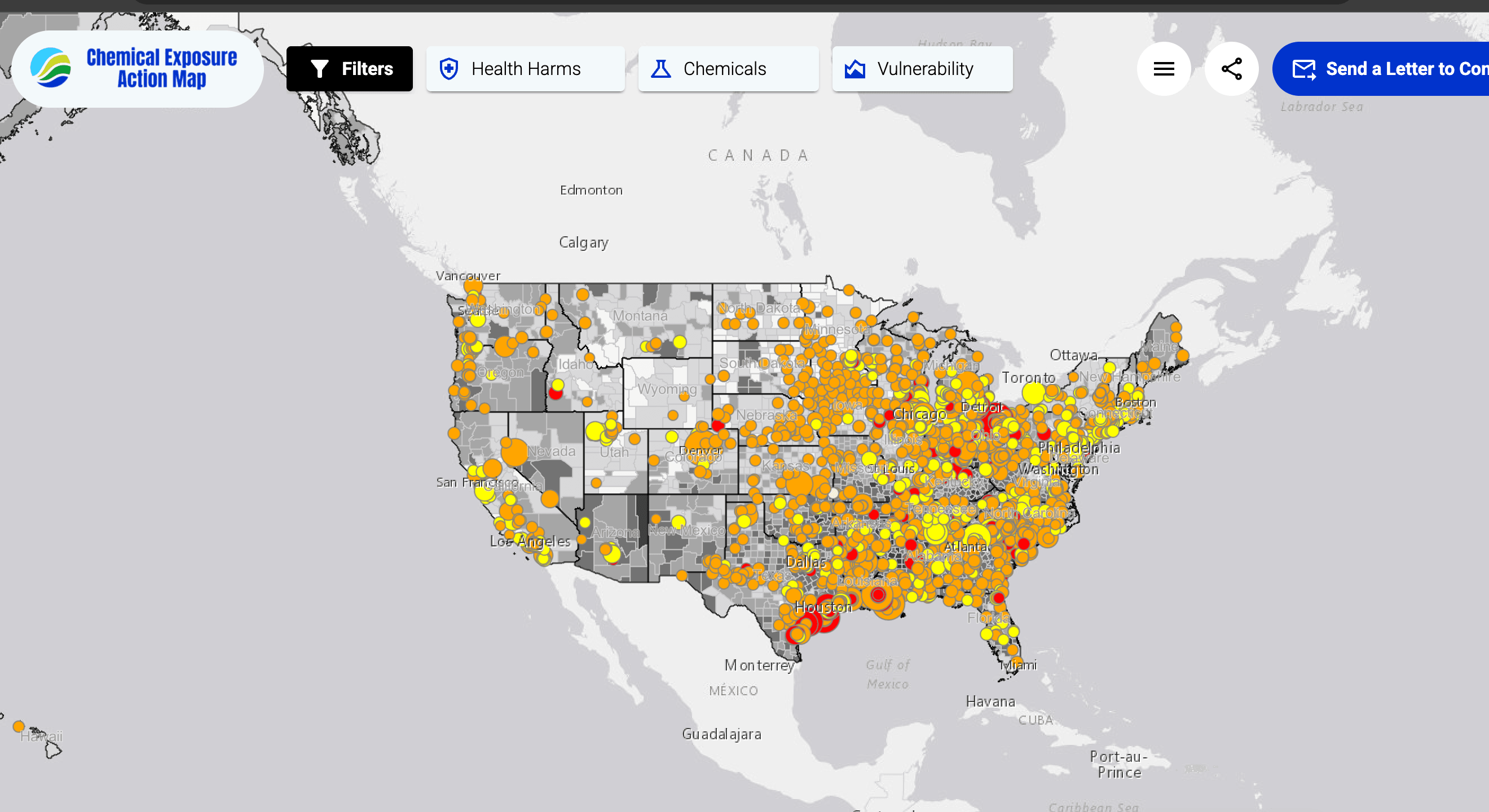
We built a full-stack Next.js application on top of ArcGIS WebGL that ingests facility-level emissions from the EPA Toxics Release Inventory, joins them with census-tract demographics and EDF's proprietary cumulative-risk model, and renders the result as a multi-layer interactive map.
Users can toggle health-harm overlays, filter by chemical class, and click any facility dot to see exactly what it releases and how the surrounding tract scores on cumulative risk — turning abstract regulatory data into a visceral, location-specific picture.
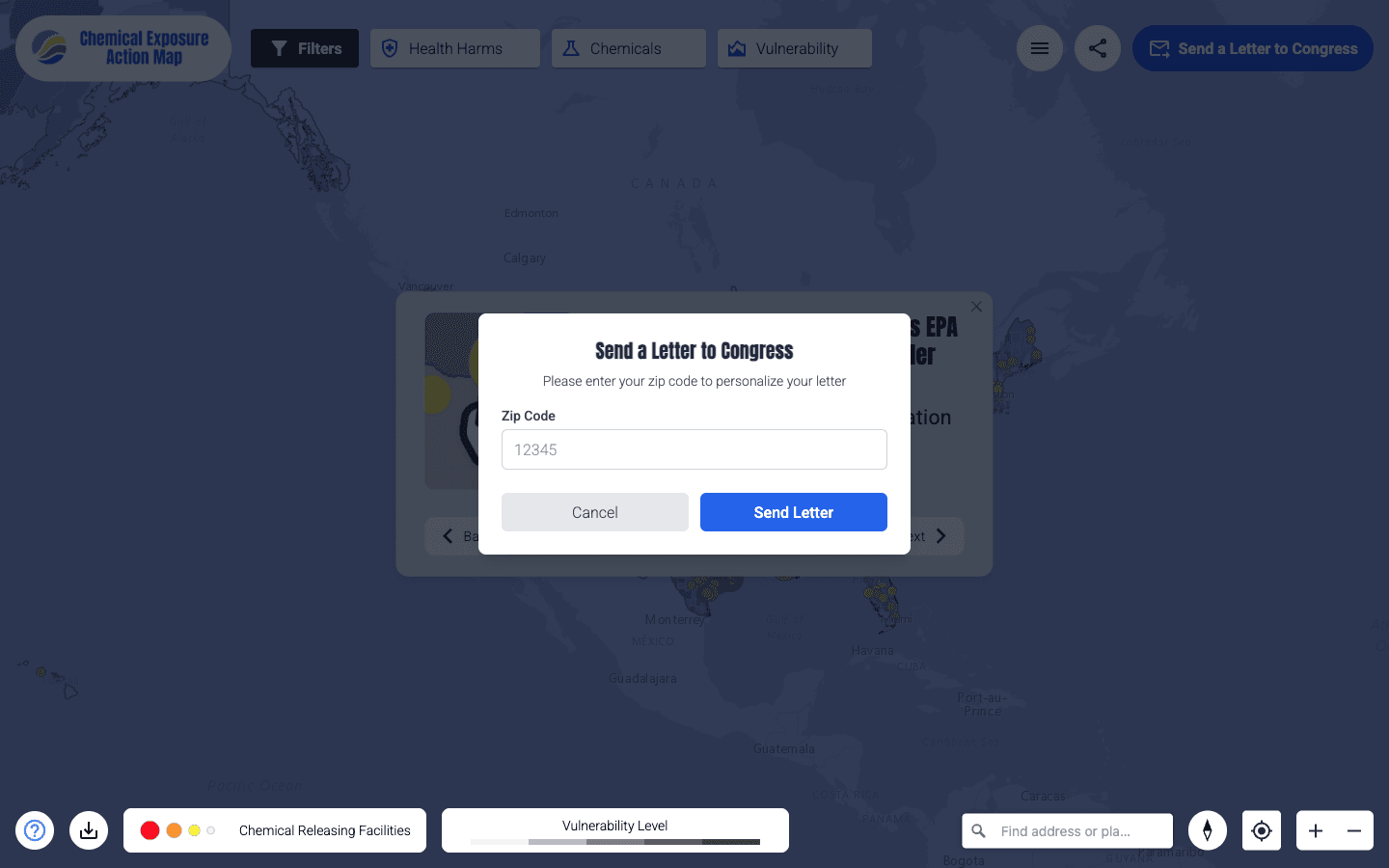
The "Send a Letter to Congress" feature closes the loop from awareness to action: enter a zip code, and the app resolves your congressional representatives, pre-fills a letter with your local exposure data, and lets you send it in one click.
ArcGIS WebGL renders 70k+ census tracts and 20k+ facility dots at 60 fps. Toggling layers (health harms, chemicals, vulnerability) triggers server-side joins, not client re-fetches.
From EPA Data to Congressional Action
TRI Ingestion
EPA Toxics Release Inventory data ingested and normalized per facility
Scheduled ETL → PostgreSQL
Risk Modeling
EDF cumulative-risk model scores each census tract across 12+ exposure factors
Demographic + proximity joins
Map Rendering
ArcGIS WebGL renders 70k+ tracts and 20k+ facility dots with togglable overlays
Feature layers + WebGL tiles
Facility Lookup
Click a dot to fetch facility details, chemicals released, and tract risk score
ArcGIS hitTest → detail panel
Letter Generation
Zip code resolves to congressional reps; letter pre-filled with local exposure data
Cicero API → letter template
TRI Ingestion
EPA Toxics Release Inventory data ingested and normalized per facility
Scheduled ETL → PostgreSQL
Risk Modeling
EDF cumulative-risk model scores each census tract across 12+ exposure factors
Demographic + proximity joins
Map Rendering
ArcGIS WebGL renders 70k+ tracts and 20k+ facility dots with togglable overlays
Feature layers + WebGL tiles
Facility Lookup
Click a dot to fetch facility details, chemicals released, and tract risk score
ArcGIS hitTest → detail panel
Letter Generation
Zip code resolves to congressional reps; letter pre-filled with local exposure data
Cicero API → letter template
03Key Features
Interactive Mapping
ArcGIS WebGL map with togglable layers for health harms, chemical types, and community vulnerability scores — rendered at 60 fps across 70,000+ census tracts.
Facility Detail Modal
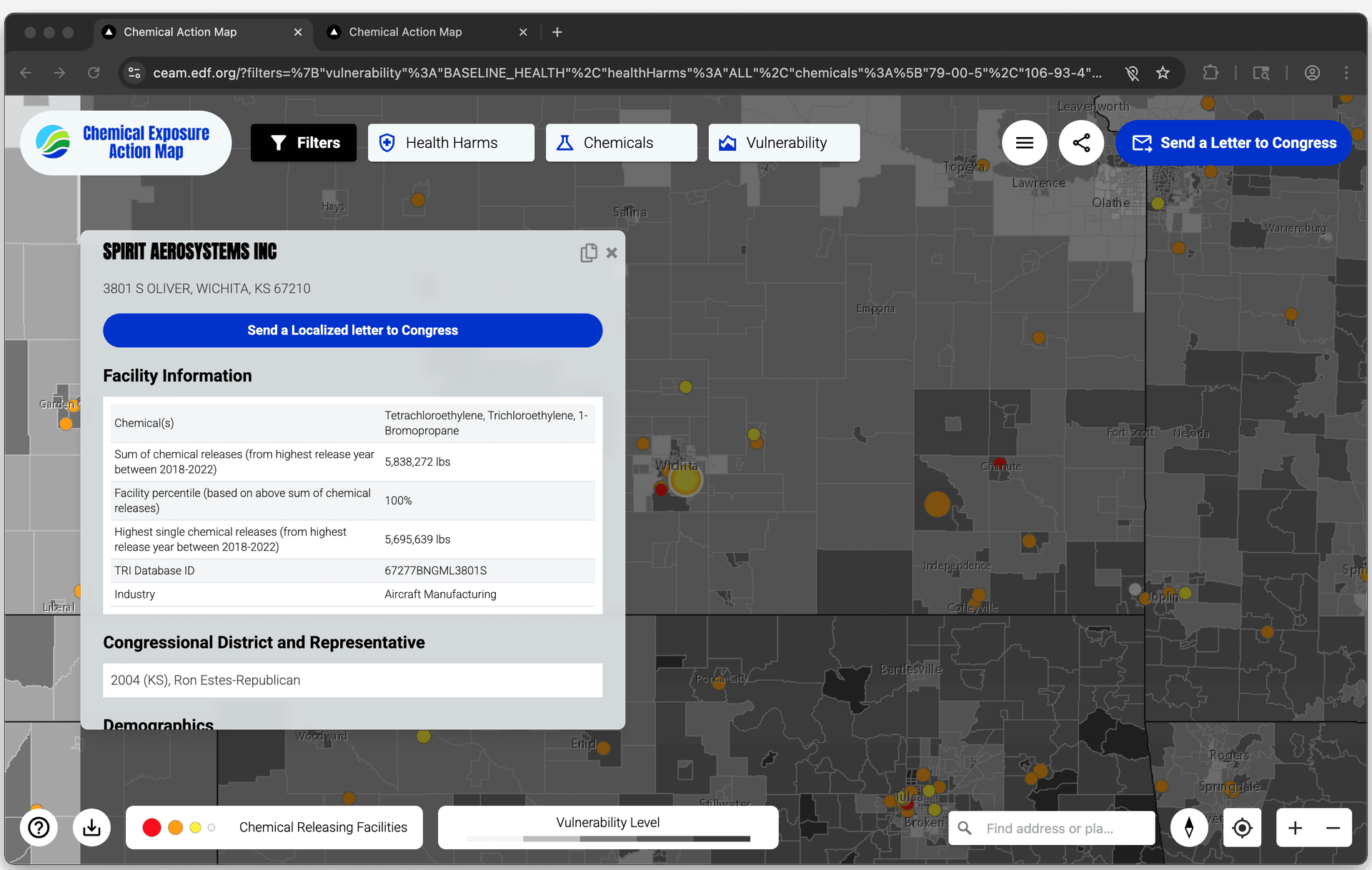
Click any facility dot to see its name, EPA ID, chemicals released, release medium (air, water, land), and the census tract's cumulative risk score — all fetched from the TRI dataset joined with EDF's risk model.
Cumulative Risk Analysis
Layers multiple chemical exposures, demographic vulnerability factors, and proximity data into a single risk score per census tract — surfacing the compounding danger that single-chemical assessments miss.
Send a Letter to Congress
One-click advocacy: enter a zip code and the app generates a personalized letter to your House and Senate representatives, pre-loaded with local chemical exposure data and EDF's policy ask.
The "Send a Letter" flow captures a zip code, resolves congressional districts via the Cicero API, and pre-fills a letter with tract-level exposure data — turning passive data consumption into direct advocacy.
04Results
Census tracts mapped
TRI facilities
Risk factors layered
Congressional action